
The lead pillar. Treyegen™ (OKG-0303) for acute infectious conjunctivitis, with HSV keratitis and CMV retinitis behind it.
Of the 10 million cases, approximately 60% are viral and 40% are bacterial.
Clinical differential diagnosis is extremely challenging as the signs and symptoms of disease are virtually indistinguishable — the rate of clinical accuracy in diagnosing viral versus bacterial conjunctivitis is less than 50%. Both etiologies result in moderate to severe inflammation of the conjunctiva, the mucous membrane that covers the front of the eye and lines the inside of the eyelids.
Corneal opacity occurs in 20-50% of viral conjunctivitis cases, and can lead to scarring or clouding of the cornea. Significantly, this may result in long-term visual impairment and premature/chronic dry eye.
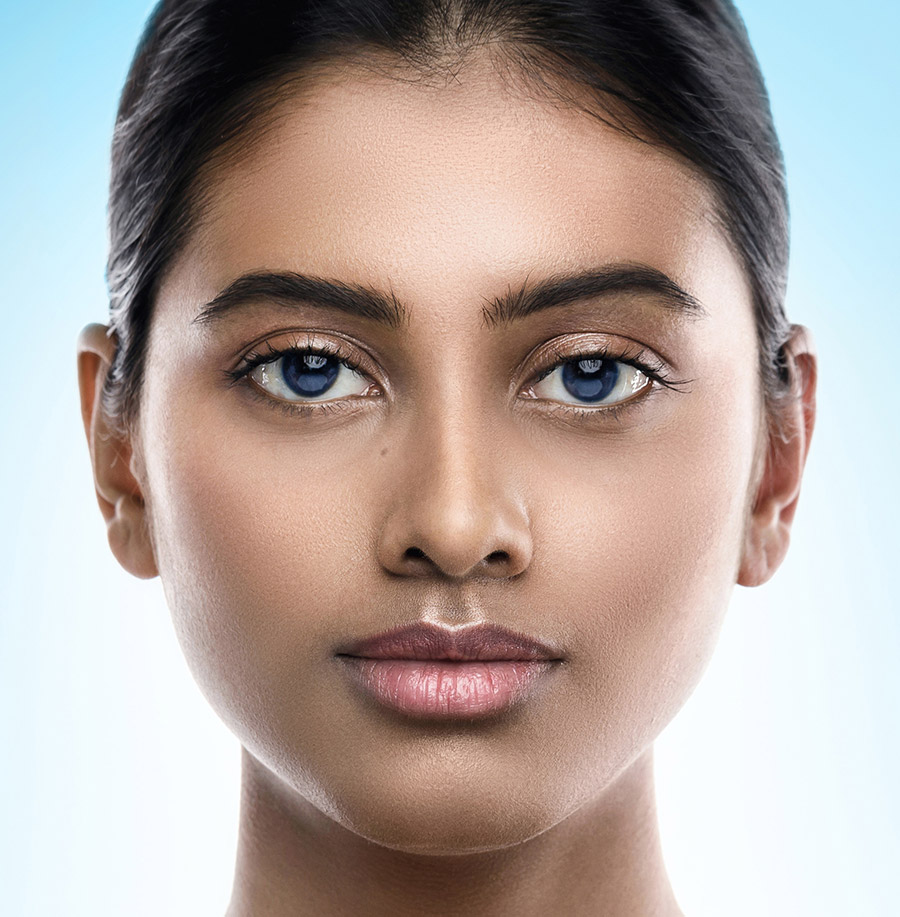
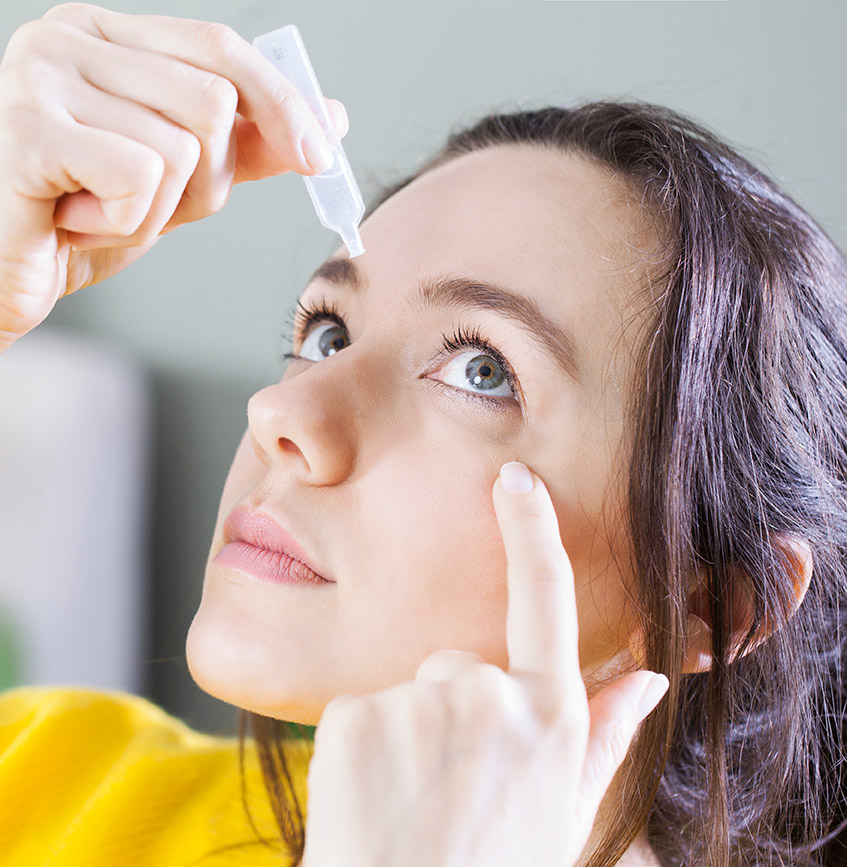
For infectious types, around 95% of first visits are coded simply as “conjunctivitis” or “acute conjunctivitis”, with no specification of adenoviral or bacterial etiology.
Of the 10 million cases, approximately 60% are viral and 40% are bacterial.
Clinical differential diagnosis is extremely challenging as the signs and symptoms of disease are virtually indistinguishable — the rate of clinical accuracy in diagnosing viral versus bacterial conjunctivitis is less than 50%. Both etiologies result in moderate to severe inflammation of the conjunctiva, the mucous membrane that covers the front of the eye and lines the inside of the eyelids.
Corneal opacity occurs in 20-50% of viral conjunctivitis cases, and can lead to scarring or clouding of the cornea. Significantly, this may result in long-term visual impairment and premature/chronic dry eye.
OKG-0303, ranpirnase 0.03% alone, and ranpirnase with oxymetazoline all produced significant antiviral activity compared with vehicle control.
There is no inhibitory or dilution effect caused by adding oxymetazoline 0.1% and tobramycin 0.3% to the ranpirnase in the OKG-0303 formulation.
Tobramycin retains its individual contribution within OKG-0303, with no dilution of efficacy.
Together with the rabbit antiviral study, OKG-0303 should be an effective treatment for both viral and bacterial conjunctivitis.
Six months of stability achieved and extrapolated to two years at 25 °C in the supply chain, with long-term stability ongoing to 24 months.
A 14-day repeated-dose ocular toxicity study in 36 New Zealand White rabbits at up to 20 times the human daily dose found statistically significant IOP changes that were not clinically relevant, all staying well within normal range, with all other results normal.
RUBY is complete. It tested ranpirnase on its own and provided the first clinical evidence of dose-responsive antiviral activity with topical ranpirnase. EMERALD is a separate, ongoing program built around Treyegen™ (OKG-0303), the three-component combination — and because its Phase 2 portion is a contribution-of-elements study, it will also generate further data on ranpirnase alone.
A Phase 1 open-label, multicenter study to evaluate the safety and efficacy of OKG-0303 in healthy subjects and in patients with acute infectious conjunctivitis, expanding to a Phase 2 randomised, multicenter, double-blind, vehicle-controlled trial in patients with acute infectious conjunctivitis.
Approximately 20 patients, ten healthy and ten with disease. An open-label evaluation of OKG-0303.
Six arms: OKG-0303, OKG-0301 (ranpirnase alone), oxymetazoline 0.1%, ranpirnase with oxymetazoline, ranpirnase with tobramycin, and vehicle. Approximately 240 evaluable subjects are planned, The Phase 2 portion is designed to characterize the contribution of each component and inform the design and statistical powering of subsequent studies.
EMERALD is a Phase 1/2 study of OKG-0303 in acute infectious conjunctivitis, designed to evaluate safety, tolerability and antiviral activity in a real-world patient population.


Formulation and stability complete; clinical manufacturing in progress.

A seamless study of OKG-0303 in acute infectious conjunctivitis.
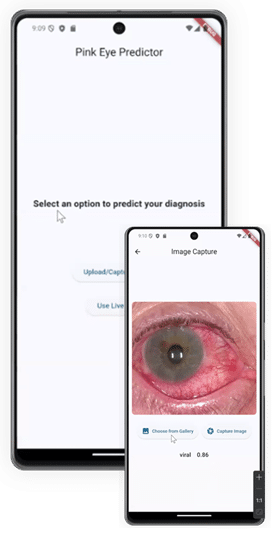
A companion tool built on a proprietary algorithm and company-controlled training dataset. It has achieved 86% accuracy using images alone to classify viral, bacterial and healthy eyes. Data and images from the EMERALD study are expected to expand the training dataset and strengthen validation. The initial target audience is telehealth platforms, and the tool is being built platform-agnostic for ease of integration, with planned support for iOS, Android and major web browsers.
Classification accuracy from images alone
Classes: viral, bacterial and healthy
Planned platform support